• About
  • Books
  • Films

Postwar Germany

~ 1945-1949

Postwar Germany

Author Archives: Anika

Party like it’s 1945

08 Thursday May 2014

Posted by Anika in Allies, postwar, Soviets

≈ 2 Comments

Tags

capitulation, may, Russian, schukow, soviets, surrender, war

kapitulationHappy May 8.

It’s been 69 years since World War 2 ended. The German military capitulated to the western allies, but the main signatures were done in Berlin, in the Soviet HQ in Karlshorst.

The German-Russian Museum is there now. Today the Russian ambassador to Germany and a Ukrainian diplomat are scheduled to toast the anniversary. A toast for peace —  a big gesture, considering what’s been going on in the Ukraine lately.

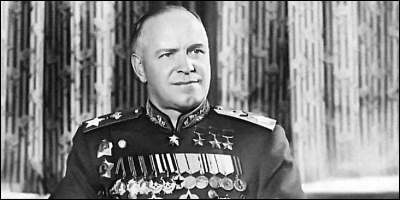
This goes to show how alive World War 2 is for the former Soviet Union. No wonder — 27 million of their people died. When it was finally over, on the night of May 8 and 9, 1945, there was a party to end all parties. It took place in a room you can see if you head to the German-Russian Museum. The hall where the capitulation was signed is preserved as it was, the flags of the 4 allied powers on the wall, the tables arranged as they were on that fateful night. Alcohol flowed – no big surprise when the Russians were throwing the bash — and apparently General Schukow himself did some fancy dancing. schukow_georgij400

Of course, the Germans of the time had nothing to celebrate. Even people grateful for peace — and most were after 6 years of war — lived in shock, helplessness and blatant fear. Especially in Berlin, May 8 was the start (or the continuation) of a horrendous time for German women and girls raped and assaulted by mostly Russian soldiers. The city smoldered after the Battle of Berlin. There was no order, no government, no safety. A time of chaos.

But the deadliest war in history was over. A moment to celebrate.

Eavesdropping

02 Friday May 2014

Posted by Anika in Hunger, postwar

≈ Comments Off on Eavesdropping

Tags

bakery, bread, brotkarte

I was working on my book at a café-bakery the other day and eavesdropped on a short conversation.

A man who looked to be in his late 70s had just paid for a loaf of bread. The cashier asked him if he had a Brotkarte (bread card). The old man seemed confused. “That’s all over with.”

“Pardon?”

“We haven’t had bread cards since after the war.” The man left with his bread.

The cashier, who was maybe my age, noticed me, and rolled her eyes as if to say, “What was that old fogey going on about?” A modern bread card is just a credit card-sized paper that gets stamped every time you buy a loaf of bread at a certain bakery. After 10 stamps, you get a free loaf. This is good. Germans bake some of the best bread I’ve ever had.

The cashier didn’t know, or didn’t care to remember, that a bread card used to be the ration stamps families were forced to use during and after World War 2. Depending on how old the man really was, he spent part or all of his childhood hungry. A bread card was immensely important to his survival. If ration cards were lost, they couldn’t be replaced.

No wonder when he heard the word Brotkarte, he thought of something that hasn’t existed in Germany in almost 70 years.

A haven and a trap

23 Wednesday Apr 2014

Posted by Anika in Jewish life, postwar

≈ 2 Comments

Tags

americans, camps, holocaust, jewish, refugees

For many Holocaust survivors from Poland and other parts of central and eastern Europe, the route to freedom passed through the one country they probably didn’t want to set foot in.

It’s the immediate aftermath of the war, the first months after allied troops liberated Europe. Tens of thousands of Jews emerged from their hiding places (not many survived the Nazi camps). The joy at having survived was short-lived. They faced a new wave of anti-semitism in their homelands, and were forced to endure it or leave. The Jewish secret organization Bricha did its best to gather Jewish refugees and smuggle them to safety in a place a survivor would least expect it — Germany.

Not that it had anything to do with the defeated Germans. There was no great change of heart about Jews in the immediate postwar years. The refugees wanted to reach the American Zone. For that, they had to stop over in displaced persons camps in the US sector of Berlin. These camps were meant to be transitory, a short breather on their way to the US Zone. And eventually — they hoped — Palestine.

The wonderful blog by Rabbi Meyer Abramowitz describes his years as chaplain for the Jewish displaced persons (DP) camps in the US sector of Berlin. During his time there, the refugees turned into political pawns in the emerging Cold War.

To better understand that change I remind you that the Cold War was waged primarily in Berlin, with the Russians insisting that the American troops leave Berlin — an enclave within the Russian Zone of Occupation. The U.S. responded that it intended to remain there as stipulated by previous treaties. To demonstrate its determination to stay in Berlin, the United States declared that the DP’s would remain in Berlin’s Camps under the protection of American troops.

This decision brought an abrupt end to any further transports out of Berlin. The camps had now become holding centers for all displaced persons, Jews and non-Jews, pending their legal resettlement.

By the end of 1946, Jews were still entering Berlin’s displaced persons camps. But there was no way out. Camp Düppel, also called the Schlachtensee camp, grew to 5,000 people living in limbo. The camp expanded to include schools, recreational facilities and a synagogue. No one knew how long they would have to stay, largely cut off from the rest of Berlin. DP camps had a bad reputation among the Germans, who considered them hotbeds of crime committed by “foreign elements.”

Until 1948, the camps were both haven and trap for Jewish refugees. The Berlin Airlift and the founding of Israel finally ended the stalemate. After the Soviets cut off supply routes to Berlin, the Americans flew refugees out of the city. Numbers in the camps dwindled.

The people who lived in the DP camps endured helplessness and frustration. But they also enjoyed an unusual sense of community. They were the Surviving Remnant of a people decimated by Nazi Germany and its helpers. A recent documentary “From Hell to Hope” interviewed people who lived in the camps. It gives an unusual look at what happened in the immediate aftermath of the Holocaust.
Postwar film archive

11 Friday Apr 2014

Posted by Anika in Media

≈ Comments Off on Postwar film archive

Tags

archive, film, news, postwar, tag, welt

weltimfilmI’m about to go on vacation, but wanted to post a quick link I’ve horded in my bookmarks and haven’t shared yet. The German Bundesarchiv has a wonderful digital media site.  Part of this archive shows news footage and other films from the 1940s (and other eras, of course). I’ve spent a lot of time watching Welt in Film, for instance, news feature clips on all sorts of topics in Germany and the world in the postwar era. Everything is in German, but even if you don’t know the language, the footage is wonderful for immersing yourself in the era.

Der Spiegel — The Mirror

02 Wednesday Apr 2014

Posted by Anika in Media, postwar

≈ Comments Off on Der Spiegel — The Mirror

Tags

allies, archives, German, magazine, news, postwar, spiegel

If there’s a news magazine anywhere in the world as thick, diverse and indepth as the German Der Spiegel, I’d like to know about it. Since 1947, the weekly with the red-rimmed cover has analyzed German and world events with its own flair, a spark of independence that must have sometimes irked the allied powers during the occupation of Germany.

Spiegel was modeled after American and British news magazines. When it first appeared in the British Zone in January 1947, it had a small but significant readership, limited at the time by the postwar paper shortages. In its first few years, it developed a reputation for precise, factual journalism that it largely still holds today. It tries to be what good journalism should be — a watchdog over the government. It took to heart the goal of the Allies, who wanted to encourage a free press in Germany after years of Goebbels’ propaganda machine.

The Spiegel archives are a goldmine. Digitized as text and scanned so you can see the actual pages. If you read German and have a lot of time on your hands, browse the early postwar issues — for free. Just click on the link and scroll down to the “Weitere Titelbildgalerien und Heftarchive” where the years are listed. The articles are opinionated, sometimes snarky, often humorous and always intelligent.

I’ve learned about odd things, like Graf Adalbert Keyserlingk’s orphan village on Lake Constance, largely empty in 1947 because of the bureaucratic difficulty in sending some of Germany’s 1 million orphans out of the allied zones. I learned that the Parisian fashion world started showing women with short hair again after a period when longer hair was mode. And I learned just how hard it was for German brides to get permission to marry their GI boyfriends and move to the US (I’ll be writing a post about this soon).

Oh, and the modern Spiegel is worth reading too. It has the largest circulation of any newsmagazine in Europe. And it’s outlived similar magazines like Newsweek (gone) and Time (dwindled now to almost nothing).

← Older posts
Newer posts →
Follow Postwar Germany on WordPress.com

Categories

  • 1945
  • Allies
    • British
    • French
    • Soviets
  • Americans
  • berlin
  • Books
  • Children
  • Crime
  • Culture
  • Denazification
  • Everyday life
  • general
  • Hunger
  • Jewish life
  • Media
  • Personalities
  • Politics and government
  • postwar
  • Travel
  • Uncategorized
  • Women

Blog at WordPress.com.

Privacy & Cookies: This site uses cookies. By continuing to use this website, you agree to their use.
To find out more, including how to control cookies, see here: Cookie Policy
  • Subscribe Subscribed
    • Postwar Germany
    • Join 90 other subscribers
    • Already have a WordPress.com account? Log in now.
    • Postwar Germany
    • Subscribe Subscribed
    • Sign up
    • Log in
    • Report this content
    • View site in Reader
    • Manage subscriptions
    • Collapse this bar
 

Loading Comments...