• About
  • Books
  • Films

Postwar Germany

~ 1945-1949

Postwar Germany

Author Archives: Anika

Allied Museum

18 Wednesday Sep 2013

Posted by Anika in postwar, Travel

≈ Comments Off on Allied Museum

Tags

airlift, allied, americans, berlin, museum, sector

My recent trip to Berlin was like postwar heaven, though the state of the city at the time was anything but heavenly. I’d never heard of the Allied Museum until I found a reference to it in one of the guidebooks I dragged around. Not knowing what I’d find, I hopped on the U-bahn to Zehlendorf, a leafy district southwest of Berlin’s center.

After World War II, when the Allies divided Berlin into 4 sectors, the American sector stretched from Zehlendorf to Neukölln in the east, where it hit the Soviet sector (and from 1961, the Berlin Wall). The American headquarters lay in Zehlendorf, so it was a natural place to install the Allied Museum.
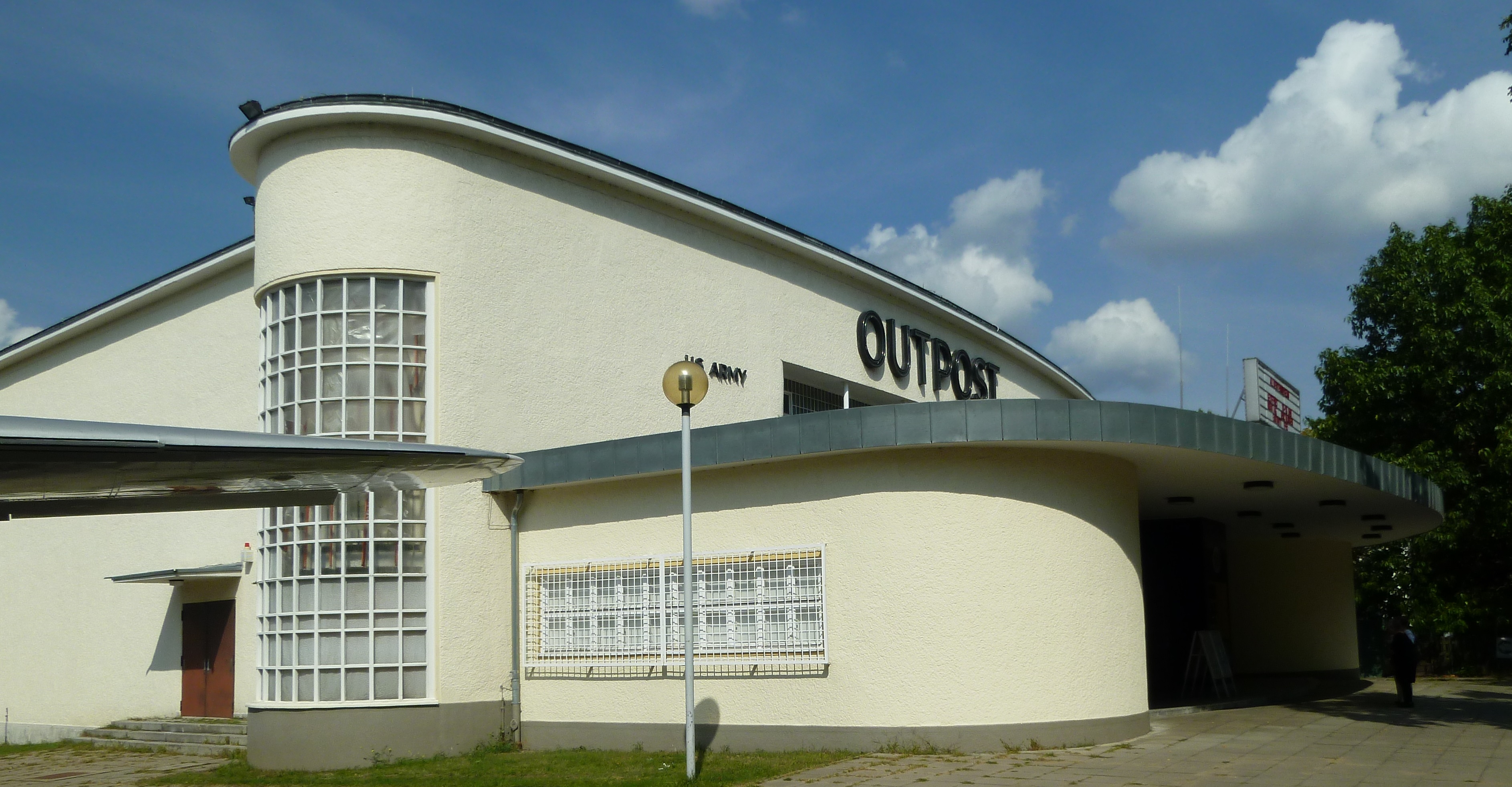
Outpost cropped

After Germany reunited, the Americans, British and French agreed to cooperate on  the museum, and you see this in the collections. Start in the old Outpost, a wonderfully curvy 1950s movie theater that holds the permanent exhibits. They focus on the first postwar years and the Berlin Airlift.

I love artifacts, and there was enough at the Outpost to keep me shooting photos till my camera’s battery went on strike. I got a close look at the contents of a CARE package. I hunkered down next to an old army jeep, amazed at the little details (I didn’t know there was a power plug in the back). I listened to broadcasts of the postwar German radio network RIAS.

Allied Museum planeIf you’re there on a Sunday, you can pay a euro and climb into a Hastings TG503,  a plane used in the Airlift donated to the museum by the British. With 6.8 tons, it had the biggest transport capacity of any plane in the Royal Air Force. Unfortunately, I wasn’t at the museum on a Sunday and didn’t get to see the interior.

Opposite the Outpost and on the far side of the plane is the Nicholson Memorial Library, which houses the second part of the permanent exhibitions and rotating exhibits. If you’re interested in the spy tunnel built in the 1950s that was like a wiretap on the Russians (I am!), a life size  model is in this part of the museum. The exhibits take you through allied life all the way up to 1994. The non-permanent exhibit about how American music helped transform postwar Germany was excellent (I’ll do a post on this).

All in all, a museum to visit if you love this era. Clayallee 135, open Tuesday to Sunday 10-18:00.

And get this. It’s free.

Expelled Germans

20 Monday May 2013

Posted by Anika in postwar, Uncategorized

≈ Comments Off on Expelled Germans

Tags

cleansing, czech, deportation, ethnic, poland

This is a tricky subject.

So tricky, I’ll leave it to the Stanford researcher James Mayfield to state what this is all about:

…the largely unknown story of more than 10,000,000 ethnic German civilians who were subjected to deportation, compulsory labour, expulsion, and in some cases starvation and ethnic violence following World War II with varying support and involvement by the governments of the Soviet Union, the United States, the United Kingdom, Czechoslovakia, Poland, Hungary, the Netherlands, Romania, and Yugoslavia.

Let’s attack the problem head on. Is it possible to talk about this without being accused of revisionist history or of feeling sorry for the Tätervolk (an ugly word implying the collective guilt of a whole people)?

In my opinion — yes.

For years, this was taboo in Germany. To some extent, it still is. There’s always an uncomfortable aftertaste when the Germans talk about any situations they suffered under during and after the war. You get two main arguments: “That generation deserved it” versus “There were perpetrators and victims in all countries.” Like the horrors of the wartime allied bombardments, the expulsions of Germans after the war were suffered largely in silence and shame. It’s taken decades and generations for people to open up about the expulsions. Many Germans today don’t know much about them.

Expellee groups claimed millions of Germans died in the postwar expulsions. For years, the West German government and the Red Cross generally agreed. But modern academic research has settled on something between 400,000 and 600,000.

Was it ethnic cleansing?

It’s a political question, one that rankles people, especially in Poland and the Czech Republic. Poles and Czechs suffered massive violence, deportation and execution at the hands of Nazi Germany. Any talk of the ethnic cleansing of Germans in their territory after the war is seen as revisionist history. They claim the Germans in their regions benefited from Hitler’s policies during the war – and in many cases, this was true, for instance when German settlers moved into houses of Poles who were expelled or killed. The interesting article “Distorted historical memory and ethnic nationalism as a cause for our forgetting the expelled Germans“ sums up their view:

What the Germans remember as ethnic cleansing or even genocide, the Czechs and Poles remember as merely the punishment of Nazi criminals and the formation of states long denied their sovereignty by German hegemony.

Cue the case of Erika Steinbach. She’s a controversial figure and the leading advocate for restitution for expellees. Her attempt to build a “Centre Against Expulsion” in Berlin failed largely because of the protest from Poland and the Czech Republic. Though the center intended to denounce ethnic cleansing in general, including the postwar Germans as a case of it was unacceptable. The German experience could not be lumped together with that of the Poles and Czechs.

President Jaroslaw Kaczynski further reflected this national perception by insisting that the Germans should “remember who was the perpetrator and who was the victim.”

I’m not Polish, Czech or German. My view of all this from the outside – though admittedly closer to the Germans since I live here – waivers between both arguments. But I don’t believe in collective guilt. No one deserved to be deported or killed no matter what ethnicity they were, and deporting Germans wholesale was an understandable, but unjust reaction to atrocities during the war.

That opinion won’t make me any friends among certain groups in Poland,  the Czech Republic and other countries where one man’s justice was another man’s reprisal. On the other hand, I don’t buy into romantic notions of the former German territories in the east. The documentaries where expelled Germans talk about their childhood and deportation or escape from the east are often moving. They were victims – the children definitely – of forces outside their control. They lost their homes and were raised in shame at who they were. But anyone who secretly wishes those lands belonged to Germany again are naive and crazy.

When pigs eat better than children

08 Wednesday May 2013

Posted by Anika in Hunger

≈ Comments Off on When pigs eat better than children

Tags

farmer, German, hamster, hunger, postwar, train

Do hard times bring a people together?

They can. But in postwar Germany, in many instances, they didn’t. Especially in the hunger winter of 1946-47.

Hunger drove the people living in the ruined cities out into the countryside. They 414px-Bundesarchiv_Bild_183-S80285,_Bahnhof_Gorgast,_'Hamsterfahrt'traded anything they could spare for food. The “hamsters” from the industrial Ruhr area clogged trains heading north to the farms in Lower Saxony, or south to the Eifel region. In backpacks and suitcases, they carried their crystal and porcelain, their damask table cloths and silver mirrors.

When the hamsters arrived in the countryside, they went on a humiliating round of the farms – begging to trade. The problem: the farmers had everything already.

Back then, Thea Merkelbach was 8 years old. Her anecdote in the book Hungerwinter sticks in my mind as a sign of how cruel people can be to others – without realizing it.

Once my mother asked for a little milk from a farmer who had 10 cows. The farmer’s wife was baking. The cookies were too dark and hard to her, so she wanted to toss them to the pigs. My mother asked for a few: ‘Give me a few before the pigs get some!’ The farmer’s wife did. She wouldn’t have thought of it herself.

In another anecdote, a boy who was 11 years old at the time told how a farmer tossed potato peels onto a dung heap for the children to eat.

From the farmers’ perspective, the hamsters from the city were a plague. Wolfgang Herchner said in Hungerwinter:

The hamsters overran the land like locusts… They stole from the farmers, sometimes in a massive way! Some fields were half dug up because cabbage or carrots had been planted there.

Even farmers who sincerely wanted to help the hungry couldn’t give to even a fraction of the people flowing in from the cities. There simply wasn’t that much to go around.

And maybe after the Nazis trumpeted the Volksgemeinschaft (a unified community of the German people) for years, some people had enough of sacrificing for others. In postwar Germany, it was every man for himself.

*Photo:Bundesarchiv, Bild 183-S80285 / CC-BY-SA [CC BY-SA 3.0 de (http://creativecommons.org/licenses/by-sa/3.0/de/deed.en)%5D, via Wikimedia Commons

Destined to Witness

28 Thursday Feb 2013

Posted by Anika in Personalities

≈ Comments Off on Destined to Witness

Tags

book, Hamburg, journalist, massaquoi, nazi, postwar, witness

Some people live amazing lives.

On a visit to Berlin a few years back, I went to a book reading by a remarkable 80 plus-year-old who I’d never heard of until then. I haven’t forgotten him since.

Hans-Jürgen Massaquoi spoke softly into the microphone in a German tinted with his native Hamburg accent though he left Germany in 1947. HHans Jürgene was a journalist, former managing editor of Ebony Magazine, introducing his autobiography Destined to Witness.

He witnessed Nazi Germany and the postwar years like few others did. His mother Bertha raised him alone in a Hamburg neighborhood. His father, a Liberian student and grandson of the consul general of Liberia in Germany, rarely visited.

So there he was, a half-African German boy under one of the most racist regimes that ever was. He couldn’t hide from the Nazis; his skin would always betray him. Ironically, he didn’t have to hide. He went to school, lived happily with a loving mother, and later learned a trade. The network of people who knew him in his Hamburg neighborhood sheltered him somewhat from the worst of the regime. But the Nazis made it clear he was a second class citizen, and he endured racism from classmates, teachers and others. For him, being second class had a few advantages. He wasn’t persecuted like the Jews, Sinti and Roma. He was forbidden from joining the army, a blessing in disguise.

desinted coverReading his book, I came away with the feeling that his story wasn’t only about growing up mixed race under the Nazis. It was about a boy who desperately wanted to belong, and couldn’t. He wanted to join the Jungvolk, the Hitler Youth for younger children. He wanted to join the Wehrmacht. I didn’t get the impression he was ashamed of having felt this way, and he shouldn’t have been. It’s natural for a child to want to fit in, no matter what environment he grows up in.

He survived the war, the fire bombing of Hamburg, and entered the postwar years. For the first time, he saw men who looked like him, African-American soldiers. After a short stint in Liberia, he emigrated to the United States — a country with its own problems with race. But there, he found what he was looking for. He served in the army, went to college, launched a successful career as a journalist.

At the book reading, he seemed to enjoy every minute of the respect and wonder the German audience gave him. I shook his hand and asked him to sign my copy of his book. A brief encounter, but one I won’t forget.

Hans-Jürgen Massaquoi died on January 19, 2013. RIP.

Postwar children – a health report

12 Tuesday Feb 2013

Posted by Anika in Children

≈ Comments Off on Postwar children – a health report

Tags

children, hunger, illness, postwar

On the playground  in my neighborhood of Essen, an old woman sat beside me on the bench while my daughters and her grandchild played in the sand. We struck up a conversation, and me being me, I asked her if she remembered much from the postwar years.

I remember being hungry. All the time. Once my mother sent me to a shop to get apples for my sister and me. Just two apples. I walked all the way home fighting the urge to eat them. I wanted to lie to my mother and tell her the shop ran out. I loved my sister but I was so hungry, I would’ve eaten her share  even though I knew she’d cry.

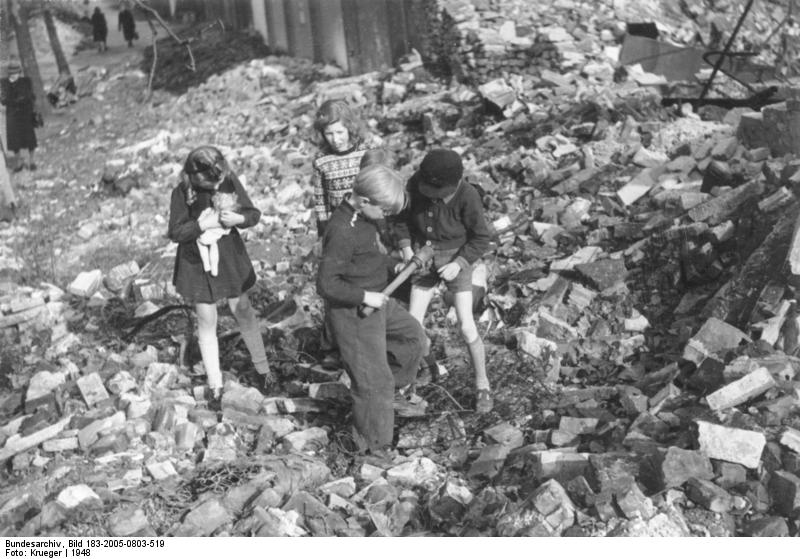
To many people, the only innocents in Germany after the war were the children. Still, they shared the catastrophic living conditions created by the adults. War and postwar children still live with trauma and the memory of shortages, especially of food. Berlin, Kinder spielen in Trümmern

Hunger and bad hygiene took its toll on kids, as I found in a Health Office report of the city of Düsseldorf from 1946. It broke down its report into three sections, and I’ll do that here:

a) Babies: Infant mortality in North Rhine-Westphalia was at 8,5 deaths per 100 births. (As comparison, there were 6,1 deaths per 100 births in 1939). Of the babies who made it into the world, many were underweight and often ill. Milk was hard to come by, and the most ruthless black marketeers sometimes added water to milk to stretch it. In the cold months, infant deaths rose also because households didn’t have any coal for heat. Mothers couldn’t bath their children as often as they needed, and cloth diapers couldn’t be washed and dried adequately.

b) Preschool children: The Health Office reported these children were in worse shape than they were in 1945. Underweight, easily tired, physically weak, anemic. They fell victim to infections and tuberkulosis.

c) School children: They were pale, physically weak, underweight and often had problems in physical development that led to bad posture or gross motor skills. They got sick easily. They had trouble concentrating in school, and on a daily basis, 10 percent of kids didn’t show up to school because they didn’t have proper shoes or clothes. Along with all of the above, teenagers were nervous and apathetic.

Photo: Bundesarchiv, Bild 183-2005-0803-519 / CC-BY-SA via ttp://creativecommons.org/licenses/by-sa/3.0/deed.en Wikimedia Commons

← Older posts
Newer posts →
Follow Postwar Germany on WordPress.com

Categories

  • 1945
  • Allies
    • British
    • French
    • Soviets
  • Americans
  • berlin
  • Books
  • Children
  • Crime
  • Culture
  • Denazification
  • Everyday life
  • general
  • Hunger
  • Jewish life
  • Media
  • Personalities
  • Politics and government
  • postwar
  • Travel
  • Uncategorized
  • Women

Blog at WordPress.com.

Privacy & Cookies: This site uses cookies. By continuing to use this website, you agree to their use.
To find out more, including how to control cookies, see here: Cookie Policy
  • Subscribe Subscribed
    • Postwar Germany
    • Join 90 other subscribers
    • Already have a WordPress.com account? Log in now.
    • Postwar Germany
    • Subscribe Subscribed
    • Sign up
    • Log in
    • Report this content
    • View site in Reader
    • Manage subscriptions
    • Collapse this bar
 

Loading Comments...