• About
  • Books
  • Films

Postwar Germany

~ 1945-1949

Postwar Germany

Author Archives: Anika

Hunger Winter

26 Wednesday Sep 2012

Posted by Anika in Hunger

≈ Comments Off on Hunger Winter

Tags

coal, hunger, ration, winter

In 1946/1947, Germany — and much of Europe — experienced one of the hardest winters in memory. It came to be called the Hungerwinter in German.

Life in the ruins became nearly unbearable for many. Especially in the Ruhr area where I’ve done most of my research, the food situation was catastrophic. Record low temperatures froze the waterways so that ships with perishable foods imported from abroad were trapped in the harbors. A bad harvest meant less fresh food sent from the agricultural parts of Germany to the cities. In Essen, it’s said the actual ration people received amounted to just over 700 calories a day per person.

A coal shortage, due only in part to the coal exported by the Allies from the Ruhr region, meant people had trouble heating their homes. The “White Death,” as the Germans called it, took its victims. How many people died as a result of hunger, cold and illness in this period isn’t clear. Some historians estimate hundreds of thousands.

German public television produced an interesting docu-drama on this, so interesting to me that I bought the book based on the show. Hungerwinter: Überleben nach dem Krieg links the fate of several different families over that winter.


Prison Journal

20 Thursday Sep 2012

Posted by Anika in Culture

≈ Comments Off on Prison Journal

Tags

books, prison, rinser

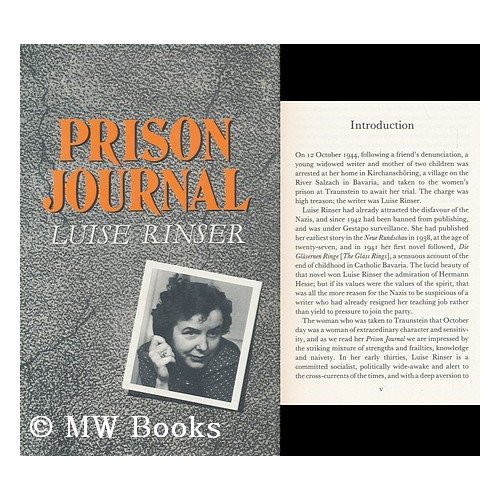
In 1946, Germany lay in ruins and everything was scarce – including paper to print books. After over a decade of censorship and lack of literary freedom, German writers who felt muzzled during the Nazi era could finally speak up again.

One of the first important postwar books published in Germany was Luise Rinser’s Prison Journal. In snippets from her secret diary, she showed the life of women in a Nazi  prison in 1944 and 1945. I read this little book in one day, swept up in the immediate feel of the diary entries and the conditions Rinser and the other women lived under. Rinser was a “political,” imprisoned for making comments that “undermined the war effort.” A friend had betrayed her (some friend!). Through connections, she slowed her case, and the end of the war was probably the only thing that saved her from being tried and executed for treason.

The book made waves after the war, but Rinser downplayed its importance in light of the bigger atrocities committed in the death camps. Compared to that, her tail of filth, hunger, fear and humiliation seemed almost mild.

Ironically, in a biography written after her death, it was revealed that Rinser had been an early Nazi enthusiast, a detail she never admitted in her lifetime.

The Fragebogen

10 Monday Sep 2012

Posted by Anika in Denazification

≈ Comments Off on The Fragebogen

Tags

baden wurttenberg, denazification, fragebogen, international military tribunal, nazis, postsdam, potsdam conference

At the Potsdam Conference in 1945, the Allies decided to rid Germany of its Nazi elements. The International Military Tribunal in Nuremberg tried the big name Nazis for war crimes. Another solution had to be found to assess just how complicit in the regime other Germans in the western zones were.

The Americans and British produced the famous Fragebogen, 131 questions on six pages. The questionnaire summarized the life, professional and political activities of the person who filled it out. At first, only German civil servants such as police, judges and city government officials had to fill out the form. Early in the process, many were removed from office because of their brown pasts. The Americans with 13 million forms for their Zone had high hopes for the Fragebogen.

Reality didn’t live up to those hopes. The Germans were too busy surviving in the ruins, still stunned by defeat, not interested in delving into their pasts. Some protested that a questionnaire was too simplistic a way to decide someone’s guilt or innocence. When German Spruchkammer were set up to conduct hearings of people suspected of complicity with the Nazis, public opinion felt the little people were being persecuted while the bigger fish got away. They weren’t altogether wrong. After a first intense wave of denazification, the Americans and British saw it was impossible to fire so many Germans with expertise in the very things the Allies needed to help rebuild the country. Many old Nazis returned to their jobs.

The Landesarchiv Baden-Wurttenberg has a wonderful copy of a Fragebogen, with all questions in German and English. It’s a fascinating look at how thorough the Allies wanted to be. It asks everything from military service to membership in Nazi organizations to whether the person was involved in stealing Jewish property. The first 3 pages are reproduced here, with a.link to the Landesarchiv’s full 6-page Fragebogen.

Forgotten years?

06 Thursday Sep 2012

Posted by Anika in general

≈ 1 Comment

Tags

germany, history, postwar

They’re not forgotten by the people who lived them. But when it comes to German history, 1945-1948 are generally known for:

1) Ruins (usually of Berlin)
2) 4-power bickering that lead to a divided Germany and eventually, the Wall
3) Berlin Airlift

Until a few years ago, that’s pretty much all I knew about the time between World War 2 and the Wirtschaftswunder of the 1950s. Somewhere in there, the Deutschmark was born, okay (1948). Germany was bombed to oblivion, you could say, and I had a hard time imagining how it went from that to a successful, modern economy. The Marshall Plan helped, but we know from many parts of the world today that funneling money at people doesn’t mean they’re going to prosper.

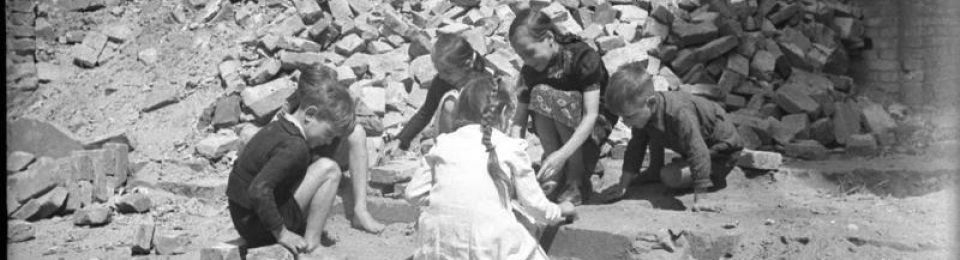
I got interested in how people lived in postwar Germany. In the first few years, people from a modern, industrial nation were thrown back to the stone ages. By people, I often mean women and children. Their men were dead, missing, imprisoned, and if the soldiers went home, they weren’t the same men who left. In general, the Germans had to cope with what they saw as the shame of defeat, and the deeper shame of individual (and some say, collective,) guilt. How did they live under those circumstances? What was it like for a child to carry a brick to school every day so that the walls could be rebuilt? What kind of change happens in a mother who silently lets her daughter slip away to be with an Allied soldier in exchange for food? From the Allied side, what were the differences between the Soviet, British and American treatment of Germans in their zones? What was it like for an Allied soldier, often a young man with little life experience besides war, to suddenly be a victor walking around a defeated people?

These are some of the issues I’m interested in. I want to share some of the info and sources I’ve found the past couple of years.

A caveat: I know how delicate some of the topics can be. I’ll try to put “difficult” material in as much context as I can, especially if I quote something from a period source that seems strange or offensive today. I do not in any way support revisionist history that denies Nazi Germany’s atrocities, and I’m not here to make people feel sorry for the Germans of the time. I’m interested in how people lived, what they thought and felt, how they survived. Part of their survival technique was to stay silent. The flood of information about the postwar years came only in the last few decades. I want to show flashes of that unique moment in German history as well as I can.
Newer posts →
Follow Postwar Germany on WordPress.com

Categories

  • 1945
  • Allies
    • British
    • French
    • Soviets
  • Americans
  • berlin
  • Books
  • Children
  • Crime
  • Culture
  • Denazification
  • Everyday life
  • general
  • Hunger
  • Jewish life
  • Media
  • Personalities
  • Politics and government
  • postwar
  • Travel
  • Uncategorized
  • Women

Blog at WordPress.com.

Privacy & Cookies: This site uses cookies. By continuing to use this website, you agree to their use.
To find out more, including how to control cookies, see here: Cookie Policy
  • Subscribe Subscribed
    • Postwar Germany
    • Join 90 other subscribers
    • Already have a WordPress.com account? Log in now.
    • Postwar Germany
    • Subscribe Subscribed
    • Sign up
    • Log in
    • Report this content
    • View site in Reader
    • Manage subscriptions
    • Collapse this bar
 

Loading Comments...