• About
  • Books
  • Films

Postwar Germany

~ 1945-1949

Postwar Germany

Author Archives: Anika

1946 and how it changed the world

15 Tuesday Dec 2015

Posted by Anika in Books

≈ Comments Off on 1946 and how it changed the world

Tags

1946, anikascott, germany, postwar, sebestyen

1946I don’t know how I missed this one. Last year the journalist and historian Victor Sebestyen gave us his take on the watershed year 1946 in his nonfiction book 1946: The Making of the Modern World. I just saw the hardcover at my local German bookstore, but I haven’t read it yet. There’s a lot of postwar stuff out there right now, and this one appears to zero in on that first postwar year as the moment the political landscape shifted all over the world, for better (fall of colonial empires) or worse (the Cold War).

If anyone has checked it out already, let me know what you thought!

Anything is possible

24 Tuesday Nov 2015

Posted by Anika in 1945, Americans, postwar

≈ Comments Off on Anything is possible

Tags

anika, cologne, germany, postwar, ruins

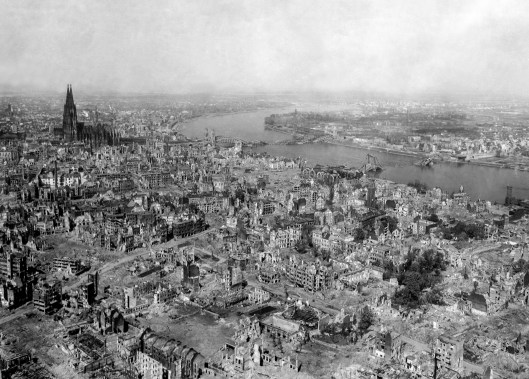
It’s natural to feel dismay at scenes of devastation, but what about hope? Cologne was about 75% destroyed in WW2, yet it’s still here, still wearing silly costumes at Karnival time, and telling really bad jokes to bad music. The amazing Cologne Dom still pierces the clouds. As bad as the world’s conflicts are, there’s always hope — to rebuild, and go on living.

Here was Cologne on April 24, 1945, view taken by the US Department of Defense (now public domain).

Koeln_1945 US Department of State

Here’s Cologne in 2010.

Kölner_Innenstadt_(Flight_over_Cologne) Neuwieser commons 20(Photo: Neuwieser, Wiki Commons 2.0)

Unexploded Bombs

05 Thursday Nov 2015

Posted by Anika in Uncategorized

≈ Comments Off on Unexploded Bombs

Tags

bombers, bombs, phophorus

In German, an unexploded bomb is called a blindgänger, and they’re just about everywhere, even now. They still take their toll here and there, and in strange ways.

Not long ago, a man found a lump of brownish rock while he was jogging along the Rhine. It was a pretty thing, glossy like amber. He slipped it into his pocket, got into his car and began the drive home. Somewhere along the way, he burst into flames.

He hadn’t found amber. He found phosphorus. Those bombs spread fire that can reignite even after being extinguished with water. Nasty stuff. The bit of it the man found had lain in the Rhine all these decades, and came to the surface now because the water levels are extremely low. Once the phosphorus dried and warmed to a certain temperature in the man’s car, it ignited 70 years after the war ended.

Evacuations to disarm World War II bombs are so common, my husband insists it was a legitimate excuse for why a kid didn’t do his schoolwork, the postwar German version of “the dog ate my homework.” I don’t know about that — I’ve lived here 15 years and was never evacuated — but there does seem to be an evacuation going on somewhere in Germany pretty much all the time.

And no wonder, when you see the number of bombs experts think are still in the ground — about 100,000 across the country. North Rhine-Westphalia, where I live, is the most populous and formerly the most industrialized state in Germany. It lies on the western border. Those were the right factors to make NRW target #1 for allied bombers. Half of the 1.3 million tons of explosives tossed on Germany landed in the industrial regions of NRW. Last year, explosives teams disarmed 927 bombs. 264 of them weighed more than 50 kilograms.

And so, people have to be vigilant when digging in cities or forests all over the country. Though there are reports of children who find things like grenades and bring them home (a recent news story; I’d be horrified if my daughters brought back a WW II grenade!), most people don’t have as much bad luck as the man by the Rhine. Last I heard, he endured severe burns, but he lived.
Filming the Holocaust

14 Wednesday Oct 2015

Posted by Anika in Allies, Jewish life, Media, postwar

≈ Comments Off on Filming the Holocaust

Tags

films, germany, holocaust, postwar, war

Most of us have seen film footage of the concentration camps. Just the mention of them conjures up in our minds the piles of corpses, or the ovens. In the immediate postwar years, those images were new for most people, and even more shocking than they are for us now. Army film crews recorded thousands of hours of footage in an attempt to capture the scope of what happened.

The Allies guessed surprisingly early how important it was to present proof of the  atrocities in the form of film. The Germans were to see what they had allowed under the Nazi regime, and the world at large was to see the unthinkable acts committed in the shadows of an already dark war.

Earlier this year, HBO broadcast Night Will Fall, a look at what happened to the “German Concentration Camps Factual Survey,” a dry name for a horrific compilation of footage of Bergen Belsen, Auschwitz and Dachau. Alfred Hitchcock supervised the production, but his big name wasn’t enough to keep the project afloat. The British government canceled, and the footage was stored at the Imperial War Museum until it was unearthed in the 1980s, then digitized and restored in 2010.

Why was the original project canceled? “Night Will Fall” director André Singer told the LA Times that postwar priorities shifted quickly; the British saw the need for Germany to get back on its feet (no doubt in the face of the Soviet threat). Reminders of the camps wouldn’t help.  Authorities also worried the footage of the camps would create more sympathy for the Jews wanting to go to Palestine, a difficult political topic before the founding of Israel.

Some of Hitchcock’s footage was recycled for Billy Wilder and Hanus Burger’s short, finished documentary Death Mills, which was shown in the US and British Zones of Germany in 1946. Pregnant women were warned not to go see it.

Ten years after the end of the war, Alain Resnais directed what I consider one of the most moving films about the camps, Night and Fog. I saw it in high school and have never forgotten it.

1945 in pictures and words

11 Monday May 2015

Posted by Anika in 1945

≈ Comments Off on 1945 in pictures and words

Tags

cities, english, multimedia, spiegel

Today I was happy to see Der Spiegel’s English version of its beautiful multimedia series on the fate of select German and non-German cities at the end of World War 2. You can hear the original interviewees with English subtitles while rare period footage roles in the background. There are photos, maps, stats and wartime video.

An immersive experience.

← Older posts
Newer posts →
Follow Postwar Germany on WordPress.com

Categories

  • 1945
  • Allies
    • British
    • French
    • Soviets
  • Americans
  • berlin
  • Books
  • Children
  • Crime
  • Culture
  • Denazification
  • Everyday life
  • general
  • Hunger
  • Jewish life
  • Media
  • Personalities
  • Politics and government
  • postwar
  • Travel
  • Uncategorized
  • Women

Blog at WordPress.com.

Privacy & Cookies: This site uses cookies. By continuing to use this website, you agree to their use.
To find out more, including how to control cookies, see here: Cookie Policy
  • Subscribe Subscribed
    • Postwar Germany
    • Join 90 other subscribers
    • Already have a WordPress.com account? Log in now.
    • Postwar Germany
    • Subscribe Subscribed
    • Sign up
    • Log in
    • Report this content
    • View site in Reader
    • Manage subscriptions
    • Collapse this bar
 

Loading Comments...