• About
  • Books
  • Films

Postwar Germany

~ 1945-1949

Postwar Germany

Author Archives: Anika

Grand Central: postwar shorts

21 Thursday Aug 2014

Posted by Anika in Books, postwar

≈ Comments Off on Grand Central: postwar shorts

Tags

grand central, postwar, short, stories

I’m back from a summer in the USA. It was great. One of the things I did was scour the bookstores at airports and malls for promising new stuff. I found a book that might interest some of you. grandcentral

Grand Central is a short story collection set in 1945. Grand Central Station in NY is the heart or starting point of each tale, as I understand it. I haven’t read it yet, mainly because I’m not so interested in “stories of postwar love and reunion.” Makes it all sound a bit romance-y, which is not my genre.

But it might be yours, and there might be a lot more to these stories if you care to give them a try.

Postwar Artifacts

10 Thursday Jul 2014

Posted by Anika in Everyday life, postwar

≈ Comments Off on Postwar Artifacts

Tags

artifacts, nachkriegszeit, postwar

For those of you interested in seeing postwar artifacts, here’s a quick link from my horde of bookmarks.

Nachkriegszeit.de is all in German, and is mostly lists and links of stuff you can look at like toys or clothes or shoes from the mid-40s and so on. It’s run by a group that offers its collections to museums. I don’t know anything about them, but the website is interesting for anyone who appreciates everyday life objects from the past. If you read German, there’s a lot of good information on the site too.

Liebe, American-style

24 Tuesday Jun 2014

Posted by Anika in Allies, Americans, postwar, Women

≈ Comments Off on Liebe, American-style

Tags

brides, GIs, marriage, postwar

Now that the posts about casual encounters between German women and allied men are out of the way, I thought it was time to do one about the couples that got hitched. The Allied Museum in Berlin has some great information about this in the book to its former exhibition “It Started With a Kiss.” I’ll focus on marriage to American GIs in this post.

It’s pretty well known that GI marriages were a phenomenon. By 1949, about 20,000 German brides and fiancés had moved to the United States. No small feat considering marriages were allowed only since December 1946. Apparently, the first American GIs requested to marry Germans in the fall of 1944 while the war still raged!

People can fall in love under any circumstances, of course, but German women and GIs started out with the kind of baggage no relationship needs. Nonfraternization laws banned romance at first, but when even officers ignored the rules, they were abandoned. The concept of collective guilt cast a shadow over all Germans, even teenage girls who spent most of their lives under Nazi rule. Romance with the victor equaled treason for some Germans.

Some Americans felt the same way. The media reported intensely about the moral dangers of Germany for the boys, and the public debated if and how German women should be allowed into the US. Women called “Nazi-Gretchens” in the US press weren’t necessarily going to be welcomed in American homes.

But there’s no stopping love. The War Brides Act in late 1945 and similar acts in later years laid the foundation for wives and children of US personnel to enter the country.

First they had to meet. Maybe at work, where Germans often took menial or clerical jobs in allied facilities and organizations. Maybe in cafés, restaurants or dance clubs. One German GI bride met her future husband on a Berlin street as she was rushing to catch a bus. She was 19, he was 24. They hit it off right away, but their road to a life together in Brooklyn had more than its share of bumps. Ursula lived in the Soviet sector of Berlin, and couldn’t get the papers to emigrate. She had to finagle an American Sector address via friends. She didn’t talk to many people about her plans out of fear someone would inform on her to the Soviet authorities. Her boyfriend returned to the States in October 1945 and worked from there to cut through the bureaucracy. Only in April 1947 did she board a flight from Tempelhof Airport to New York.

She was one of the lucky ones. She never felt foreign in her new home, since practically everybody was foreign in Brooklyn. Two years after she married, she became a US citizen.

Good news

01 Sunday Jun 2014

Posted by Anika in Books, postwar

≈ 5 Comments

Tags

book, germany, literary, london, novel, postwar

I’m happy to announce a prominent literary agency in London is representing me and my debut novel, a thriller set in postwar Germany. That novel is the reason this blog exists. So much research that can’t possibly fit in the story has landed here.

It’s tough to get noticed by a literary agent these days, and I’m thrilled to have found one who believes so strongly in the story I want to tell. The road to a traditional publisher is slow and bumpy, and there are no guarantees. But I hope my story of postwar Germany — with all its twists, turns, hopes, anguish and moral questions — finds a good publisher. And lots and lots of readers!

For now, I’m still putting the finishing touches on the manuscript. And my follow-up novel, whatever it may be (haven’t decided yet!), will probably be set partly or wholly in postwar Berlin.

I’ll keep you posted, and thanks for reading.

The men belong to us all

19 Monday May 2014

Posted by Anika in postwar, Women

≈ 4 Comments

Tags

men, postwar, shortage, women

Many more German women survived the war in freedom than men. That’s not to say women in the German armed forces and civilians came out without a scratch. The casualties from the bombing war were high, and women were interned in allied prisoner of war camps, a fact not widely known.

The women faced a shortage of men right after the war. How big a shortage?

In the Soviet Zone in 1945, there were 297 women for every 100 men between age 18-30. All over Germany, the most intensive incarceration of men happened right after the war, so it was no surprise the numbers were particularly bad. And that generation, the generation of men in their 20s, always pays a high price in war.

A couple of years later in the British Zone, the numbers look a bit better. In 1939, the year the war broke out, 33% of the German population was men between age 21 and 42. In 1947, it was 25%. In real numbers, there were 2 million more women than men in the British Zone. By the end of 1947, most of the prisoners of war held by the British and Americans had been freed. The Soviets held millions of prisoners until well into the 1950s.

So women had to make do without men, as they’d done for most of the war. They worked in reconstruction, in factories, and in other work traditionally reserved for men.

zgbdc5-68gom0ysu8w1teij3uq-originalOn the personal front, the postwar years saw a dramatic rise in divorces. Despite the man shortage, women and men walked away from quick wartime marriages, or marriages that had broken apart during the war. For women, the Allied armies offered opportunity for a new start. They might become an Ami-liebchen or strike up a relationship with other allied soldiers out of love, a survival instinct, or both.

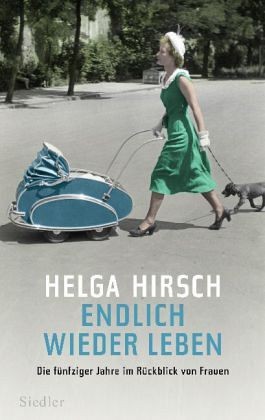
In the immediate postwar years, the German men who were available seemed to have had loose relationships with German women in a kind of unspoken arrangement. The journalist Helga Hirsch’s book “Endlich wieder leben” portrays nine German women and their experiences from war to Wirtschaftswunder. One quotes her mother: “There aren’t enough men…and those that came back belong to us all.” It’d be a mistake to think of these relationships only in sexual terms. Postwar Germany had a shortage of just about everything, and the relationships women built tended to be practical. A man could help to repair a house or get rationed goods. That was likely more important to her than the prestige of having a man at a time when there were so few to go around.
 

← Older posts
Newer posts →
Follow Postwar Germany on WordPress.com

Categories

  • 1945
  • Allies
    • British
    • French
    • Soviets
  • Americans
  • berlin
  • Books
  • Children
  • Crime
  • Culture
  • Denazification
  • Everyday life
  • general
  • Hunger
  • Jewish life
  • Media
  • Personalities
  • Politics and government
  • postwar
  • Travel
  • Uncategorized
  • Women

Blog at WordPress.com.

Privacy & Cookies: This site uses cookies. By continuing to use this website, you agree to their use.
To find out more, including how to control cookies, see here: Cookie Policy
  • Subscribe Subscribed
    • Postwar Germany
    • Join 90 other subscribers
    • Already have a WordPress.com account? Log in now.
    • Postwar Germany
    • Subscribe Subscribed
    • Sign up
    • Log in
    • Report this content
    • View site in Reader
    • Manage subscriptions
    • Collapse this bar
 

Loading Comments...