• About
  • Books
  • Films

Postwar Germany

~ 1945-1949

Postwar Germany

Tag Archives: germany

Pocket Guide to Germany

25 Wednesday Sep 2013

Posted by Anika in Allies, postwar

≈ Comments Off on Pocket Guide to Germany

Tags

american, germany, guide, occupation, troops

Checkpoint Charlie in Berlin is a tourist trap. I hate to say that. It’s a true piece of postwar history. But every time I’ve gone there, it feels more and more like a Disney film. I think it’s cute to get your picture taken with young men dressed as American soldiers in front of a hut with sandbags (not authentic), and the stands lining the street selling faux Russian fur hats and Soviet medals are just funny. But it’s too easy to forget how dangerous the place used to be.

Oh, and there are gift shops. Lots of them. There are so many “authentic” pieces of the Berlin Wall for sale, I get the impression the wall could’ve wrapped itself several times around the whole city.

pocket guideBut I love gift shops, and it was one on Checkpoint Charlie were I found a reproduction of the the Pocket Guide to Germany, prepared by the US Army Information Branch in 1944. It’s a short and handy guide for US troops preparing to occupy Germany. It’s also a great look at the attitude and goals the troops had when the war ended.

There was a real concern that US boys would feel sorry for the Germans, especially the women and children, after they moved in and saw the conditions they lived under. The Pocket Guide tried to keep troops on guard against the dangers of the postwar Germans.

However friendly and repentant, however sick of the laws of the Nazi party, the Germans have sinned against the laws of humanity and cannot come back into the civilized fold by merely sticking out their hands and saying — “I’m sorry.

Troops were told to especially be on their guard against German youth, the generation aged 14 to 28, who spent half their lives or more under Hitler.

Under a section called “Alibis,” the Guide arms US troops with answers to comments Germans might make to downplay their role in Hitler’s regime. Here’s an example.

German line: “After World War I, it was the cruel, inhuman terms of the Treaty of Versailles that made World War II inevitable.”

American answer: “…the Allies’ treatment of Germany after World War I was generous compared with Germany’s treatment of all the countries she has conquered and occupied since 1939.”

Absolutely true.

The Pocket Guide described the land and climate of Germany, some history, a bit of language. But the core goal of this interesting booklet was on page 33.

Let your attitude in Germany be:

Firm–

Fair–

Aloof–

and above all,

Aware…

Forgotten years?

06 Thursday Sep 2012

Posted by Anika in general

≈ 1 Comment

Tags

germany, history, postwar

They’re not forgotten by the people who lived them. But when it comes to German history, 1945-1948 are generally known for:

1) Ruins (usually of Berlin)
2) 4-power bickering that lead to a divided Germany and eventually, the Wall
3) Berlin Airlift

Until a few years ago, that’s pretty much all I knew about the time between World War 2 and the Wirtschaftswunder of the 1950s. Somewhere in there, the Deutschmark was born, okay (1948). Germany was bombed to oblivion, you could say, and I had a hard time imagining how it went from that to a successful, modern economy. The Marshall Plan helped, but we know from many parts of the world today that funneling money at people doesn’t mean they’re going to prosper.

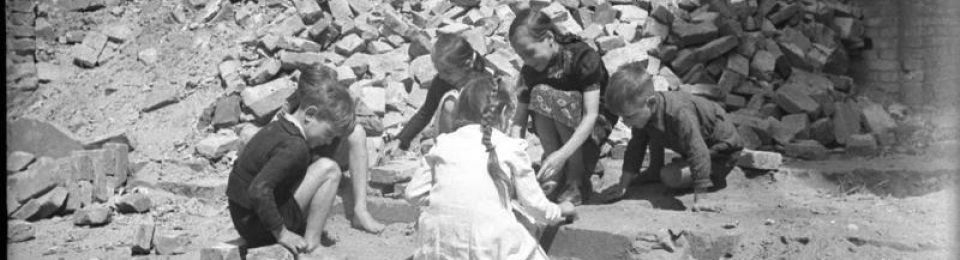
I got interested in how people lived in postwar Germany. In the first few years, people from a modern, industrial nation were thrown back to the stone ages. By people, I often mean women and children. Their men were dead, missing, imprisoned, and if the soldiers went home, they weren’t the same men who left. In general, the Germans had to cope with what they saw as the shame of defeat, and the deeper shame of individual (and some say, collective,) guilt. How did they live under those circumstances? What was it like for a child to carry a brick to school every day so that the walls could be rebuilt? What kind of change happens in a mother who silently lets her daughter slip away to be with an Allied soldier in exchange for food? From the Allied side, what were the differences between the Soviet, British and American treatment of Germans in their zones? What was it like for an Allied soldier, often a young man with little life experience besides war, to suddenly be a victor walking around a defeated people?

These are some of the issues I’m interested in. I want to share some of the info and sources I’ve found the past couple of years.

A caveat: I know how delicate some of the topics can be. I’ll try to put “difficult” material in as much context as I can, especially if I quote something from a period source that seems strange or offensive today. I do not in any way support revisionist history that denies Nazi Germany’s atrocities, and I’m not here to make people feel sorry for the Germans of the time. I’m interested in how people lived, what they thought and felt, how they survived. Part of their survival technique was to stay silent. The flood of information about the postwar years came only in the last few decades. I want to show flashes of that unique moment in German history as well as I can.

Newer posts →
Follow Postwar Germany on WordPress.com

Categories

  • 1945
  • Allies
    • British
    • French
    • Soviets
  • Americans
  • berlin
  • Books
  • Children
  • Crime
  • Culture
  • Denazification
  • Everyday life
  • general
  • Hunger
  • Jewish life
  • Media
  • Personalities
  • Politics and government
  • postwar
  • Travel
  • Uncategorized
  • Women

Blog at WordPress.com.

Privacy & Cookies: This site uses cookies. By continuing to use this website, you agree to their use.
To find out more, including how to control cookies, see here: Cookie Policy
  • Subscribe Subscribed
    • Postwar Germany
    • Join 90 other subscribers
    • Already have a WordPress.com account? Log in now.
    • Postwar Germany
    • Subscribe Subscribed
    • Sign up
    • Log in
    • Report this content
    • View site in Reader
    • Manage subscriptions
    • Collapse this bar
 

Loading Comments...