• About
  • Books
  • Films

Postwar Germany

~ 1945-1949

Postwar Germany

Tag Archives: postwar

Good news

01 Sunday Jun 2014

Posted by Anika in Books, postwar

≈ 5 Comments

Tags

book, germany, literary, london, novel, postwar

I’m happy to announce a prominent literary agency in London is representing me and my debut novel, a thriller set in postwar Germany. That novel is the reason this blog exists. So much research that can’t possibly fit in the story has landed here.

It’s tough to get noticed by a literary agent these days, and I’m thrilled to have found one who believes so strongly in the story I want to tell. The road to a traditional publisher is slow and bumpy, and there are no guarantees. But I hope my story of postwar Germany — with all its twists, turns, hopes, anguish and moral questions — finds a good publisher. And lots and lots of readers!

For now, I’m still putting the finishing touches on the manuscript. And my follow-up novel, whatever it may be (haven’t decided yet!), will probably be set partly or wholly in postwar Berlin.

I’ll keep you posted, and thanks for reading.

The men belong to us all

19 Monday May 2014

Posted by Anika in postwar, Women

≈ 4 Comments

Tags

men, postwar, shortage, women

Many more German women survived the war in freedom than men. That’s not to say women in the German armed forces and civilians came out without a scratch. The casualties from the bombing war were high, and women were interned in allied prisoner of war camps, a fact not widely known.

The women faced a shortage of men right after the war. How big a shortage?

In the Soviet Zone in 1945, there were 297 women for every 100 men between age 18-30. All over Germany, the most intensive incarceration of men happened right after the war, so it was no surprise the numbers were particularly bad. And that generation, the generation of men in their 20s, always pays a high price in war.

A couple of years later in the British Zone, the numbers look a bit better. In 1939, the year the war broke out, 33% of the German population was men between age 21 and 42. In 1947, it was 25%. In real numbers, there were 2 million more women than men in the British Zone. By the end of 1947, most of the prisoners of war held by the British and Americans had been freed. The Soviets held millions of prisoners until well into the 1950s.

So women had to make do without men, as they’d done for most of the war. They worked in reconstruction, in factories, and in other work traditionally reserved for men.

zgbdc5-68gom0ysu8w1teij3uq-originalOn the personal front, the postwar years saw a dramatic rise in divorces. Despite the man shortage, women and men walked away from quick wartime marriages, or marriages that had broken apart during the war. For women, the Allied armies offered opportunity for a new start. They might become an Ami-liebchen or strike up a relationship with other allied soldiers out of love, a survival instinct, or both.

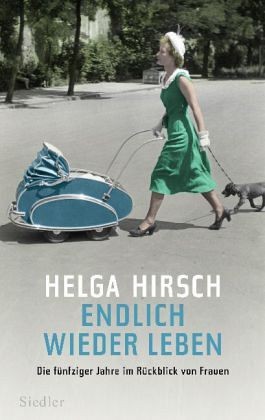
In the immediate postwar years, the German men who were available seemed to have had loose relationships with German women in a kind of unspoken arrangement. The journalist Helga Hirsch’s book “Endlich wieder leben” portrays nine German women and their experiences from war to Wirtschaftswunder. One quotes her mother: “There aren’t enough men…and those that came back belong to us all.” It’d be a mistake to think of these relationships only in sexual terms. Postwar Germany had a shortage of just about everything, and the relationships women built tended to be practical. A man could help to repair a house or get rationed goods. That was likely more important to her than the prestige of having a man at a time when there were so few to go around.
 

Postwar film archive

11 Friday Apr 2014

Posted by Anika in Media

≈ Comments Off on Postwar film archive

Tags

archive, film, news, postwar, tag, welt

weltimfilmI’m about to go on vacation, but wanted to post a quick link I’ve horded in my bookmarks and haven’t shared yet. The German Bundesarchiv has a wonderful digital media site.  Part of this archive shows news footage and other films from the 1940s (and other eras, of course). I’ve spent a lot of time watching Welt in Film, for instance, news feature clips on all sorts of topics in Germany and the world in the postwar era. Everything is in German, but even if you don’t know the language, the footage is wonderful for immersing yourself in the era.

Der Spiegel — The Mirror

02 Wednesday Apr 2014

Posted by Anika in Media, postwar

≈ Comments Off on Der Spiegel — The Mirror

Tags

allies, archives, German, magazine, news, postwar, spiegel

If there’s a news magazine anywhere in the world as thick, diverse and indepth as the German Der Spiegel, I’d like to know about it. Since 1947, the weekly with the red-rimmed cover has analyzed German and world events with its own flair, a spark of independence that must have sometimes irked the allied powers during the occupation of Germany.

Spiegel was modeled after American and British news magazines. When it first appeared in the British Zone in January 1947, it had a small but significant readership, limited at the time by the postwar paper shortages. In its first few years, it developed a reputation for precise, factual journalism that it largely still holds today. It tries to be what good journalism should be — a watchdog over the government. It took to heart the goal of the Allies, who wanted to encourage a free press in Germany after years of Goebbels’ propaganda machine.

The Spiegel archives are a goldmine. Digitized as text and scanned so you can see the actual pages. If you read German and have a lot of time on your hands, browse the early postwar issues — for free. Just click on the link and scroll down to the “Weitere Titelbildgalerien und Heftarchive” where the years are listed. The articles are opinionated, sometimes snarky, often humorous and always intelligent.

I’ve learned about odd things, like Graf Adalbert Keyserlingk’s orphan village on Lake Constance, largely empty in 1947 because of the bureaucratic difficulty in sending some of Germany’s 1 million orphans out of the allied zones. I learned that the Parisian fashion world started showing women with short hair again after a period when longer hair was mode. And I learned just how hard it was for German brides to get permission to marry their GI boyfriends and move to the US (I’ll be writing a post about this soon).

Oh, and the modern Spiegel is worth reading too. It has the largest circulation of any newsmagazine in Europe. And it’s outlived similar magazines like Newsweek (gone) and Time (dwindled now to almost nothing).

New Places page

31 Monday Mar 2014

Posted by Anika in postwar, Travel

≈ Comments Off on New Places page

Tags

allies, germany, places, postwar

If you ever wondered where to go for some authentic postwar German history, check out the new Places page. I’ve kicked it off with the allied power centers in postwar Berlin with brief descriptions and photos. Over time, I’ll be adding more places from around Germany and museum collections around the world. As always, your suggestions are very welcome!

← Older posts
Newer posts →
Follow Postwar Germany on WordPress.com

Categories

  • 1945
  • Allies
    • British
    • French
    • Soviets
  • Americans
  • berlin
  • Books
  • Children
  • Crime
  • Culture
  • Denazification
  • Everyday life
  • general
  • Hunger
  • Jewish life
  • Media
  • Personalities
  • Politics and government
  • postwar
  • Travel
  • Uncategorized
  • Women

Blog at WordPress.com.

Privacy & Cookies: This site uses cookies. By continuing to use this website, you agree to their use.
To find out more, including how to control cookies, see here: Cookie Policy
  • Subscribe Subscribed
    • Postwar Germany
    • Join 90 other subscribers
    • Already have a WordPress.com account? Log in now.
    • Postwar Germany
    • Subscribe Subscribed
    • Sign up
    • Log in
    • Report this content
    • View site in Reader
    • Manage subscriptions
    • Collapse this bar
 

Loading Comments...