• About
  • Books
  • Films

Postwar Germany

~ 1945-1949

Postwar Germany

Author Archives: Anika

Tannbach: German TV’s mediocre take on postwar history

05 Monday Jan 2015

Posted by Anika in Media

≈ 6 Comments

Tags

allies, films, TV

Shame doesn’t make good TV. Shock either. Yet those are the basic emotions in the new miniseries about postwar Germany that aired on the German public TV channel ZDF last night.

Almost seventy years after the war ended, I thought maybe – just maybe — German TV could produce a good story showing its history in a way that entertains and informs.

But they forgot the entertainment part.

It’s 1945 on the border between Thuringen and Bavaria. The Allies move into the fictional village of Tannbach and the estate of its local nobility. Since it’s a border village, it’s going to be cut in half along with Germany. Part of the town in the American Zone, part in the Russian. This really happened here and there. So much for the interesting part of the background.

This is just my opinion, but stories should be about people. Not about background, not about types. Individuals should struggle for whatever they want or need against whatever the historical backdrop happens to be. We the viewers get sucked into a story when we’re just as surprised and moved by events as the characters in the story.

For that, we have to be surprised and moved. And this is where “Tannbach” failed.

Back to all that shock and shame. It’s true — these emotions sat deep in the Germans at the end of the war. Many people walked around with stony faces staring into the distance in silence. But does that make good TV? No. Is it good drama? No.

Scriptwriters and producers of historical drama have to strike a balance between what was most likely to happen in a given period, and what the audience would find compelling. The two don’t always go together. If done badly, there’s an emotional gulf between the events on screen and the viewers.

An example is the dramatic early scene when the countess sacrifices herself to save the males of the village. It was the best scene in the film’s first part, but it still didn’t move me. I was too puzzled by the reaction — or lack of — of the characters. Something like 50 people in a courtyard know the Americans are right around the corner, yet they let themselves be cowed by 3 or 4 SS guys with guns. Okay, this happens.

But the SS officer is apparently a local boy. People know him. Not one person stands up and says, “Come on, Hans (or whatever his name was), don’t be an ass. It’s over.” I watched the scene as it played out and simply didn’t believe it. At that moment of collapse, not one character expressed a second of the frustration probably built up over the Nazi years. They had to guard their tongues for a long time no matter what they believed. In a moment of high tension, one character could have stepped out of line. Maybe gotten shot for it, but still. I waited for a character to say something human. It didn’t happen. People were too busy standing around looking shocked.

Besides, someone who stepped out of line would’ve been — shock (!) — an individual. And that’s what the film didn’t have. There were lots of types. The wily Nazi who slimes with the Americans. The old lady who strokes her Hitler portrait before she prays over the rosary. The Nazi count who deserted his Volkssturm unit and says all of 10 sentences over the whole film. The Hitler Youth kid who refuses to serve the Americans in a pub. The refugee woman who gives out two young men as her sons to save them.

Any of these people have the potential of making good characters, and fail to do it. Mostly because they’re aimless. The film jumps from one person to another without anything to glue the story together. For me, the setting isn’t enough. Nobody wants anything in particular. They don’t need anything but to endure. They don’t struggle. They lay down like puppies with their paws in the air. Did this really happen? Probably. Does it make good film? No.

So I wasn’t moved. Surprise would’ve been nice, but the film didn’t give me that either. Take the first scene of the Russians moving into the village. A unit searches a farmhouse and finds an old man, a woman and her cute little boy in short pants. What happens?

You guessed it. They’re all shot. Did this happen in real life? Probably, in many places. Does it make good film? Sometimes. But by the end of the film when this scene took place, I was desperate to find something I didn’t see coming a mile away. Anything. The Soviet officer could’ve had a lackey soil the family Hitler portrait, sit the adults at the table and force them at gunpoint to eat the portrait. The cute little boy in short pants watches in horror as his family chokes on their god. He wouldn’t understand it, but he’d never forget it. The viewers either. Nothing even remotely memorable happened except for maybe the countess’s execution in the film’s first 20 minutes.

It’s disappointing when history is served up so bland. It’s another reason for people to ignore it. And possibly forget.

Postwar Christmas

08 Monday Dec 2014

Posted by Anika in Everyday life

≈ Comments Off on Postwar Christmas

Tags

Christmas, holiday

446px-Christkindlesmarkt_nuernbergAnyone who’s ever been to a Christmas market knows how important the holiday season is in Germany. After World War 2, the Germans celebrated the first peaceful Christmases any way they could. They lived in a world of shortages and destruction, but they — and the Allies in Germany — did what they could to spread a little cheer in hard times.

It wasn’t easy. Winter 1945 was known as a turnip winter. There wasn’t much food to go around, and the traditional Christmas feast was out of the question for most people. A year later, things were even worse. In December 1946, temperatures dropped to minus 20C in parts of Germany. People died of cold and hunger, though far fewer than expected considering the living conditions.

Despite the challenges, there were Christmas concerts and parties. The Allies sponsored events for children and donated food and sweets. Shops lucky enough to have window glass dressed them with tinsel and bulbs and wished their customers a Merry Christmas.

Ruth Andreas Friedrich, a Berlin journalist, wrote in her diary on December 21, 1946:

“What do you think of a Christmas tree?” Frank asked me this morning.

“A lot,” I said, “but unfortunately, there aren’t any. Unless you have a certificate that proves you have lots of children or were a Victim of Fascism.”

Frank laughed. “Or if you have a saw.”

Germans who did cut down trees in surrounding forests — illegally. The Allies controlled who harvested trees, where and when.

Christmas was (and is) a season of hope. The Germans in the postwar era needed this reminder that humanity had a future in peace, not in the violence of the inhuman war their country had started and lost.

Photo: Nuremberg Christmas Market, by Roland Berger via http://creativecommons.org/licenses/by-sa/3.0/deed.en Wikimedia Commons

Living Museum Online – German History

01 Saturday Nov 2014

Posted by Anika in Everyday life, postwar

≈ Comments Off on Living Museum Online – German History

Tags

artifacts, bundesrepublik, care, germany, museum, online

care packageEver wanted a close look at a CARE package, a pair of POW trousers or other artifacts?

The German Historical Museum, the Stiftung of the Haus der Geschichte der Bundesrepublik Deutschland and the Bundesarchiv have a nice website called the Living Museum Online, or LEMO. It combines facts about the eras in German history with eyewitness reports, multimedia and objects for exploration.

The postwar eyewitness page is here. All in German, but there’s still much to explore even if you don’t know the language. The photos and videos are also worth a look. And if you want a look at those trousers, try the 360-degree objects page.

Lost Tunnels

20 Monday Oct 2014

Posted by Anika in Everyday life, postwar

≈ 4 Comments

Tags

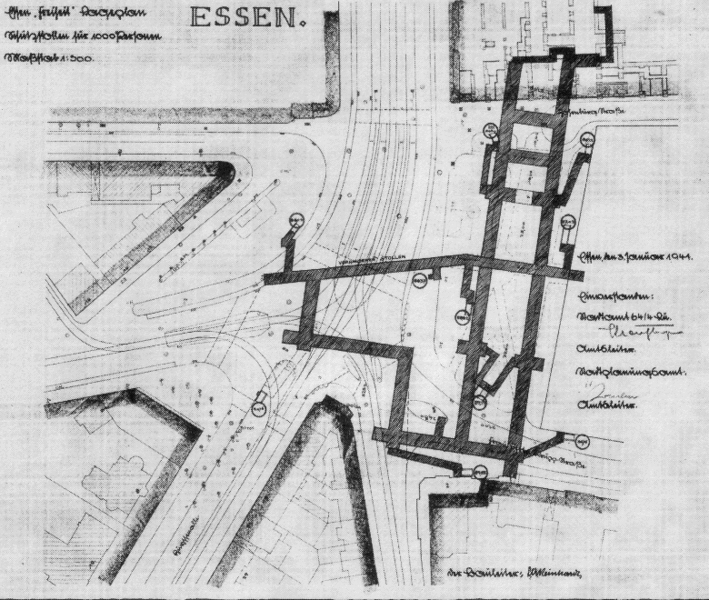
air, bombs, bunker, essen, Krupp Steel Works, tunnels, war

The true tragedy of the bombing war in World War II was measured in human lives. The numbers can vary, but here’s an idea of the devastation bombardments brought to the Axis Powers. (I think 70 years after the war, we can admit the bombs were awful for common people without getting into an argument about who deserved what).

The end of the war meant the end of bombs, but it would be years before reconstruction in Germany made a dent in the damage. In Essen, the city I live in,  the Allies targeted anything within range of the Krupp Steel Works. Ninety percent of the city center was destroyed or severely damaged.

90%. I can imagine my hometown in Michigan, the main drag where all the shops and restaurants are clustered — in ruins.

bunker feiheit mapBut back to Essen. Hard to believe, but thousands of people lived under those ruins. For years. Not just in cellars of collapsed or shaky buildings. Many lived in a tunnel system near the main train station. Some if not all the tunnels were from old coal mines — some hundreds of years old and lost to memory — that still snake under the city. Not long ago, the authorities closed down a part of the Autobahn near here because of one of these lost tunnels. They’re everywhere.

In one of my next posts, I’ll describe how people lived down in the dark.


The Beetle

24 Wednesday Sep 2014

Posted by Anika in Everyday life, postwar

≈ Comments Off on The Beetle

Tags

beetle, car, volkswagen

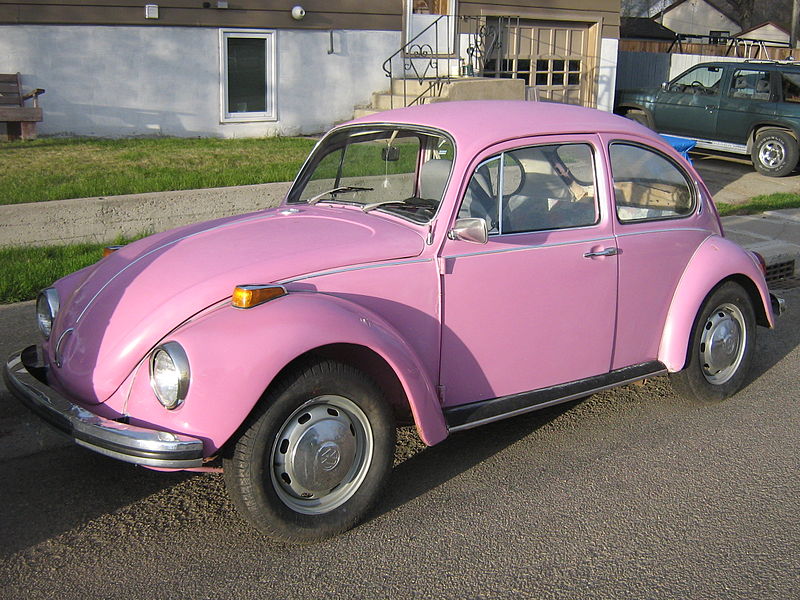
Pink_VW_Beetle_(2490867150)One of the icons of postwar car culture got its start before the war.

The Beetle was born in 1938 as the KdF Wagen, designed by Ferdinand Porsche and built by the new Volkswagen auto works in what became the city of Wolfsburg. It was supposed to be a car anyone could afford. Even the working class could — supposedly — afford the 990 Reichsmark (about $4,000) price tag. If they saved up. Anyone itching for the snazzy little car filled special coupon booklets with stamps that showed they’d deposited a minimum of 5 marks a week toward the future car.

By the way, Kraft durch Freude (KdF) was a Nazi organization that brought leisure activities to a broad mass of Germans. It’s perhaps best known for its organized holidays that made vacation possible for some Germans for the first time.

But when Germany started World War 2, there was no time for leisure. And no room at the Volkswagen factory to produce civilian cars. The KdF Wagen was transformed into a military vehicle of various designs.

Few cars ever reached the 350,000 people who saved up for one. By the end of the war, the Reichsmark had collapsed. The savings were all but worthless. The Germans who tried to get their money back saw only a tiny part of their investment returned in cash. They got a somewhat larger discount if they bought a new Volkswagen Beetle. Production started up again in 1946, and the new Beetle would become one of the symbols of the German Wirtschaftswunder.

*Photo: Pink Volkswagen Beetle by dave_7 via http://creativecommons.org/licenses/by-sa/2.0/deed.en, Wikimedia Commons

← Older posts
Newer posts →
Follow Postwar Germany on WordPress.com

Categories

  • 1945
  • Allies
    • British
    • French
    • Soviets
  • Americans
  • berlin
  • Books
  • Children
  • Crime
  • Culture
  • Denazification
  • Everyday life
  • general
  • Hunger
  • Jewish life
  • Media
  • Personalities
  • Politics and government
  • postwar
  • Travel
  • Uncategorized
  • Women

Create a free website or blog at WordPress.com.

Privacy & Cookies: This site uses cookies. By continuing to use this website, you agree to their use.
To find out more, including how to control cookies, see here: Cookie Policy
  • Subscribe Subscribed
    • Postwar Germany
    • Join 90 other subscribers
    • Already have a WordPress.com account? Log in now.
    • Postwar Germany
    • Subscribe Subscribed
    • Sign up
    • Log in
    • Report this content
    • View site in Reader
    • Manage subscriptions
    • Collapse this bar
 

Loading Comments...